Supply Chain Analysis: Shipping Delays and Cost Impact
Analyzed supply chain operations using Python, SQL, and Tableau to identify inefficiencies in shipping performance and delivery delays.
Developed a KPI-driven analysis to evaluate shipping modes, uncover cost drivers, and quantify the financial impact of late deliveries across regions.
Challenge
The supply chain dataset revealed a consistently high rate of late deliveries, but the underlying causes were unclear. Stakeholders lacked visibility into which shipping methods and regions were driving inefficiencies. The goal of this analysis was to identify where delays were occurring, determine their operational impact, and uncover opportunities to optimize shipping strategies and reduce cost.
Results
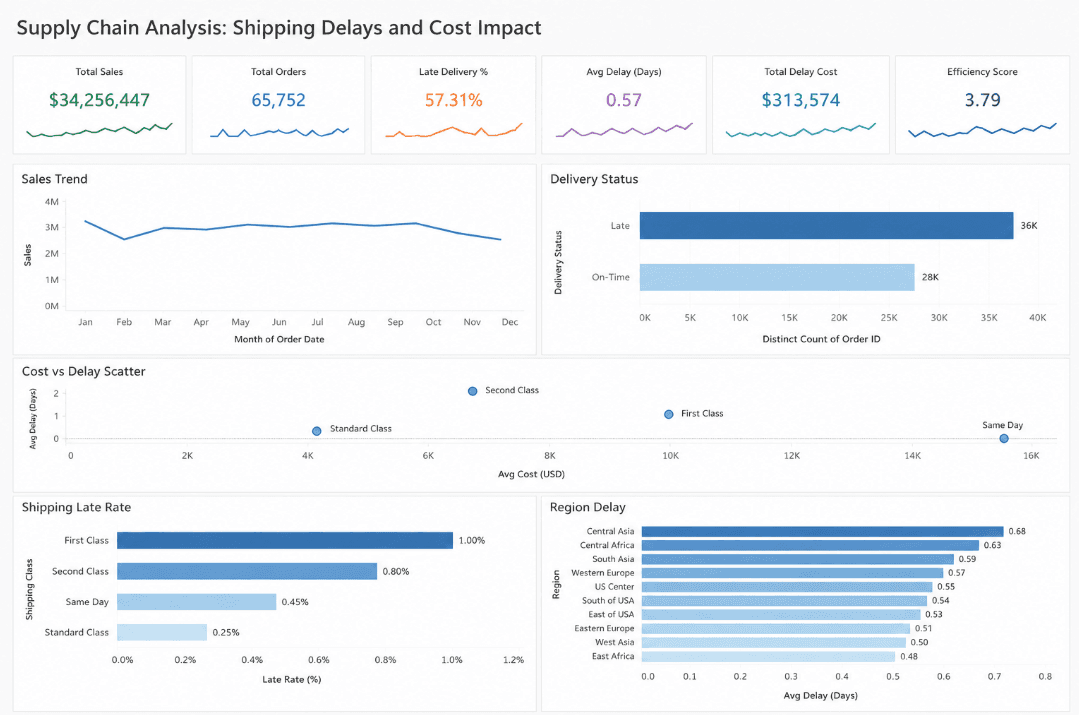
The analysis revealed that 57% of all deliveries were late, indicating significant operational inefficiencies.
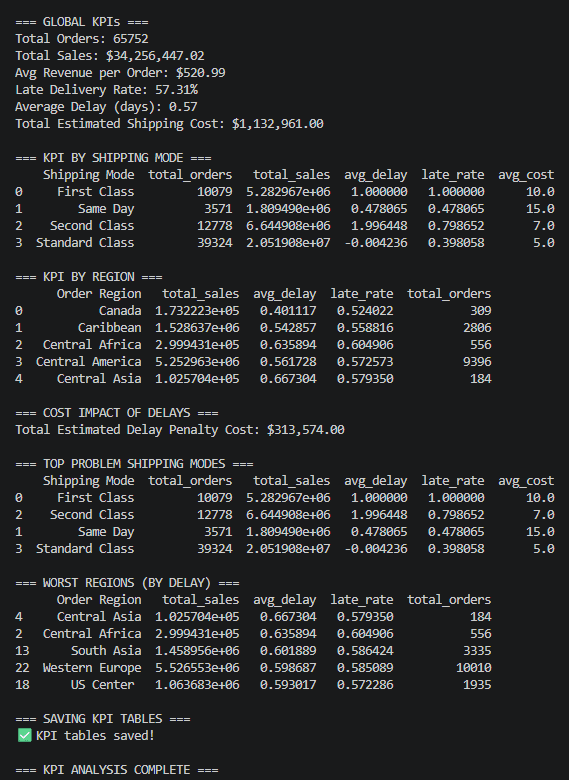
First Class shipping showed the poorest performance despite higher cost, with a 100% late delivery rate across all regions. In contrast, Standard Class provided the most efficient balance of cost and performance.
Delivery delays were estimated to contribute over $313,000 in additional operational cost, primarily driven by inefficient shipping strategies and regional inconsistencies.
57%
Late Deliveries
$313K+
Estimated Cost Impact
2x
Higher Delay in Premium Shipping
Process
Python (Data Preparation)
Cleaned and transformed raw supply chain data
Created derived fields including delivery delay, late flags, and estimated shipping cost
SQL (Data Structuring & Querying)
Structured data into relational format to simulate real-world data environments
Performed queries to analyze shipping performance, delivery timing, and regional trends
Feature Engineering (KPI Development)
Developed key metrics such as late delivery rate, cost per order, and delay penalty cost
Built efficiency score to evaluate trade-offs between shipping cost and performance
Exploratory Analysis (Python & SQL)
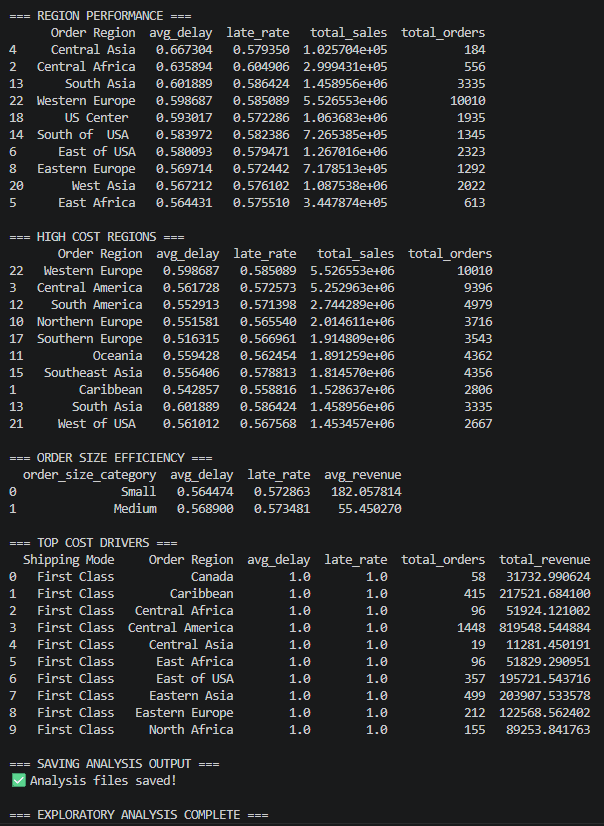
Identified inefficiencies across shipping modes and regions
Analyzed cost drivers and patterns contributing to delivery delays
Tableau (Visualization & Reporting)
Built interactive dashboard to track KPIs and highlight operational inefficiencies
Designed visuals to support decision-making on shipping strategy and cost optimization
Conclusion
Optimizing the corporate intranet significantly improved usability and employee engagement. By creating a more intuitive and interactive platform, we enhanced internal communication and collaboration, leading to a more connected and productive workforce. This project highlights the importance of user-centered design in improving organizational tools and employee satisfaction.